Nino Mallaci, the Capramal Project, and his Messina goat salami
A dream that becomes a reality and an added value for the territory, in the words of the protagonist
Riccardo Zingone 20/09/2025 0
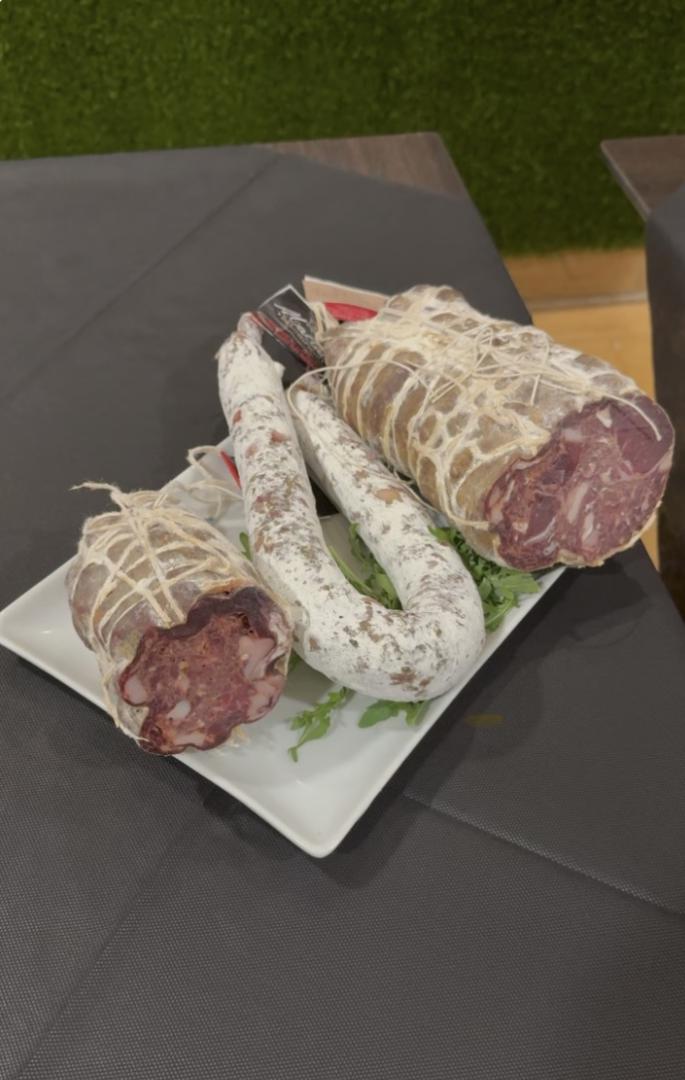
The Story of Nino's Goat Salami
To tell the story of the goat salami produced by Antonino Mallaci Bocchio—or Nino, as he's known to everyone—we need to take a big step back and listen to his history, which is rooted in an old family business dedicated to agriculture and animal husbandry.
"I come from a family of farmers and ranchers," Nino says. "I've always been fascinated by this world, which is rich in values and feelings, but also requires huge sacrifices."
As a boy, Nino split his time between school and the family business. After earning his surveyor's diploma, he decided to leave his studies to dedicate himself fully to the work, which at the time was primarily raising cows. "Our grazing lands were located between Mistretta, Cerami, and Agira, which required a lot of organizational and financial energy," he explains. In the late nineties, in his twenties, he and his father decided to build a barn on their land in the Calogno district, in Cerami but adjacent to Mistretta. Since then, all of his work has been focused there.
Like many livestock farms, Nino's also had goats and pigs. "I remember as a child," Nino continues emotionally, "I would often watch the preparation of various cured meats, including goat salami, which was made by mixing goat meat, naturally lean, with the leftover scraps from processing pork. I never forgot those flavors, those smells, and those healthy traditions. For a long time, I set a goal for myself to keep them alive through my business and my retail shop."
La Dispensa del Massaro and a Found Dream
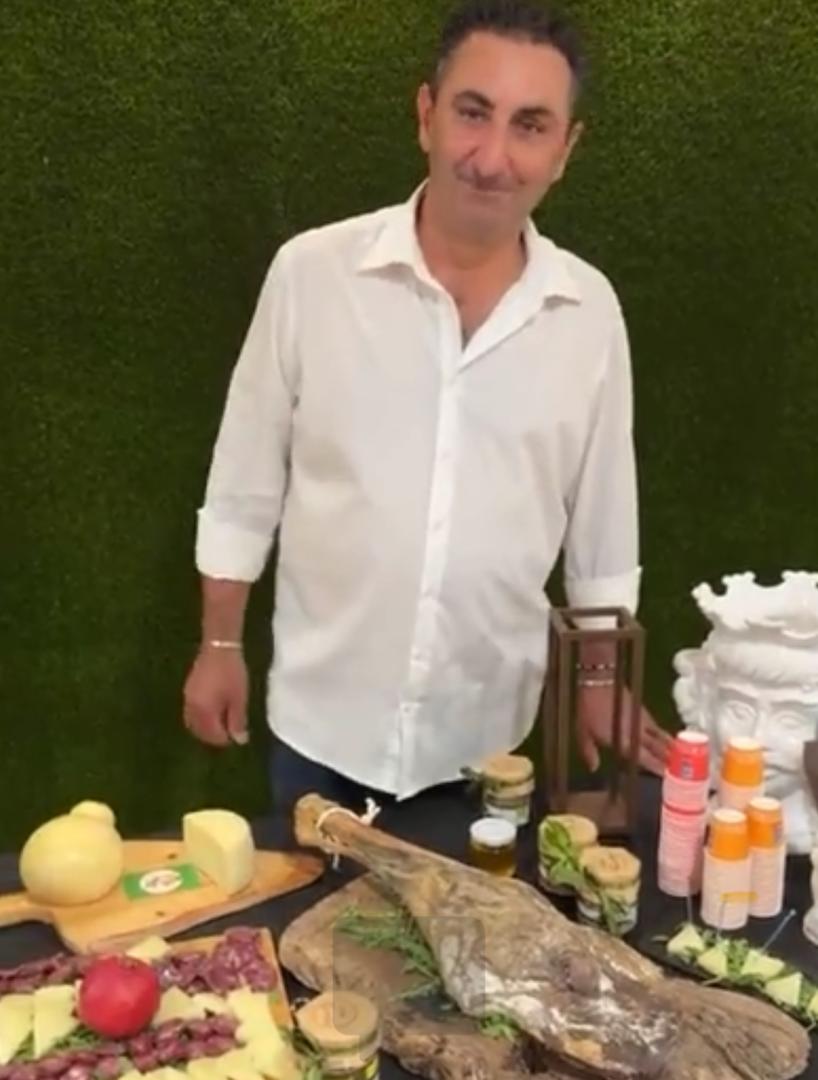
Fast forward to today, Nino opened a store in Santo Stefano di Camastra, where he started La Dispensa del Massaro. The goal was to promote and sell cured meats from the Nebrodi Black Pig, a product of local excellence, along with select beef. However, the thought of the goats continued to "graze" in his mind, along with the project of bringing their related culinary traditions to everyone's tables.
At one point, Nino had the opportunity to buy a number of certified Messina goats, an indigenous breed with roots between the Nebrodi and Peloritani mountains, prized for the quality of its milk and the goodness of its meat.
"With the purchase of this flock," Nino says, "I felt I was close to realizing my dream, but I was also aware that I had to acquire more knowledge to be able to produce a quality cured meat that honored both tradition and modern standards."
He decided to attend a specific course in Alba, Piedmont, an area with a long and established tradition in raising goats and producing cured meats. After various experiments, he succeeded in producing his own goat salami, finding the right balance of compactness, resistance to slicing, preservation, flavor, and aroma.
A Product that is a Synthesis of Tradition and Innovation
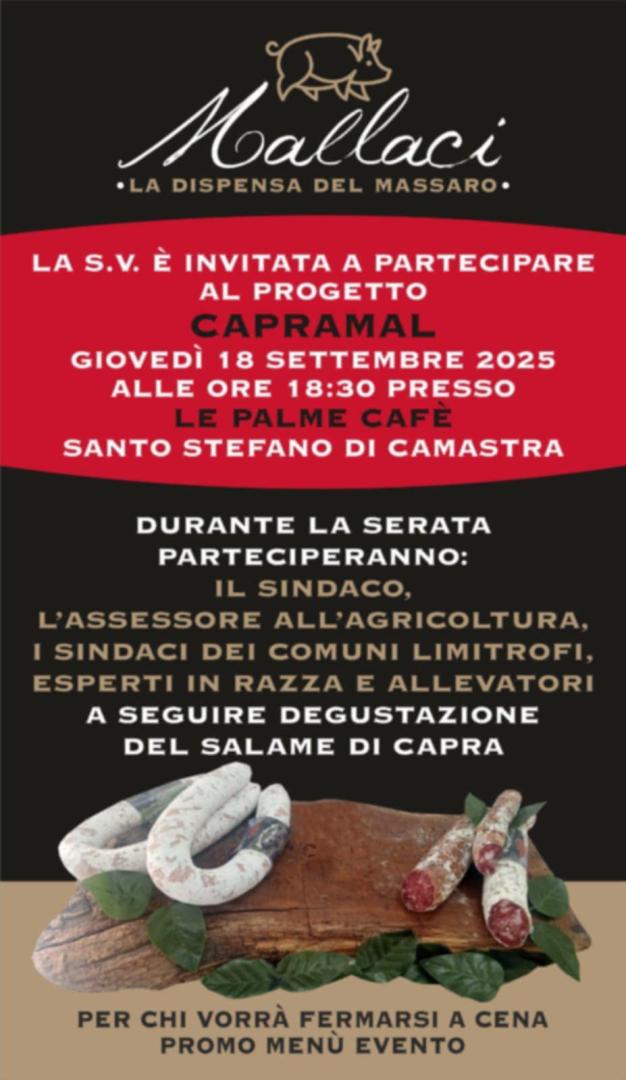
Nino's long and complex journey, supported by his family, culminated on September 18th with the official presentation of the Capramal project in Santo Stefano di Camastra. The event was attended by administrators, technicians, friends, and curious onlookers, all drawn by this tasty new product.
The gastronomic experience of tasting the goat salami was enriched by specialties produced by other local businesses: the Spina Santa company from Nicosia, which specializes in producing goat cheese, and the Casaleni company, which has long offered excellent gastronomic products. Thanks to these synergies, it was discovered how the Messina goat salami is particularly enhanced when paired, for example, with sweet provola cheese and fig jam.
A perfect synthesis of the values expressed by the Messina goat salami is captured in the words of Dr. Serena Nigrelli, the agronomist who followed Nino during the bureaucratic process: "Nino's salami is one that should be savored with your eyes closed, because that's how we can grasp unique sensations that take us back in time."
All that's left is to wish Nino and his dream-come-true sincere good luck. The territory needs this energy, vision, and enthusiasm so that our beautiful traditions can transform from memories into concrete realities.
Contact info@halaesanebrodi fro more information.
You may also like...
Riccardo Zingone 17/09/2026
In Vino Salus in Lascari: a Glass of Wine Tells the Story of the Madonie
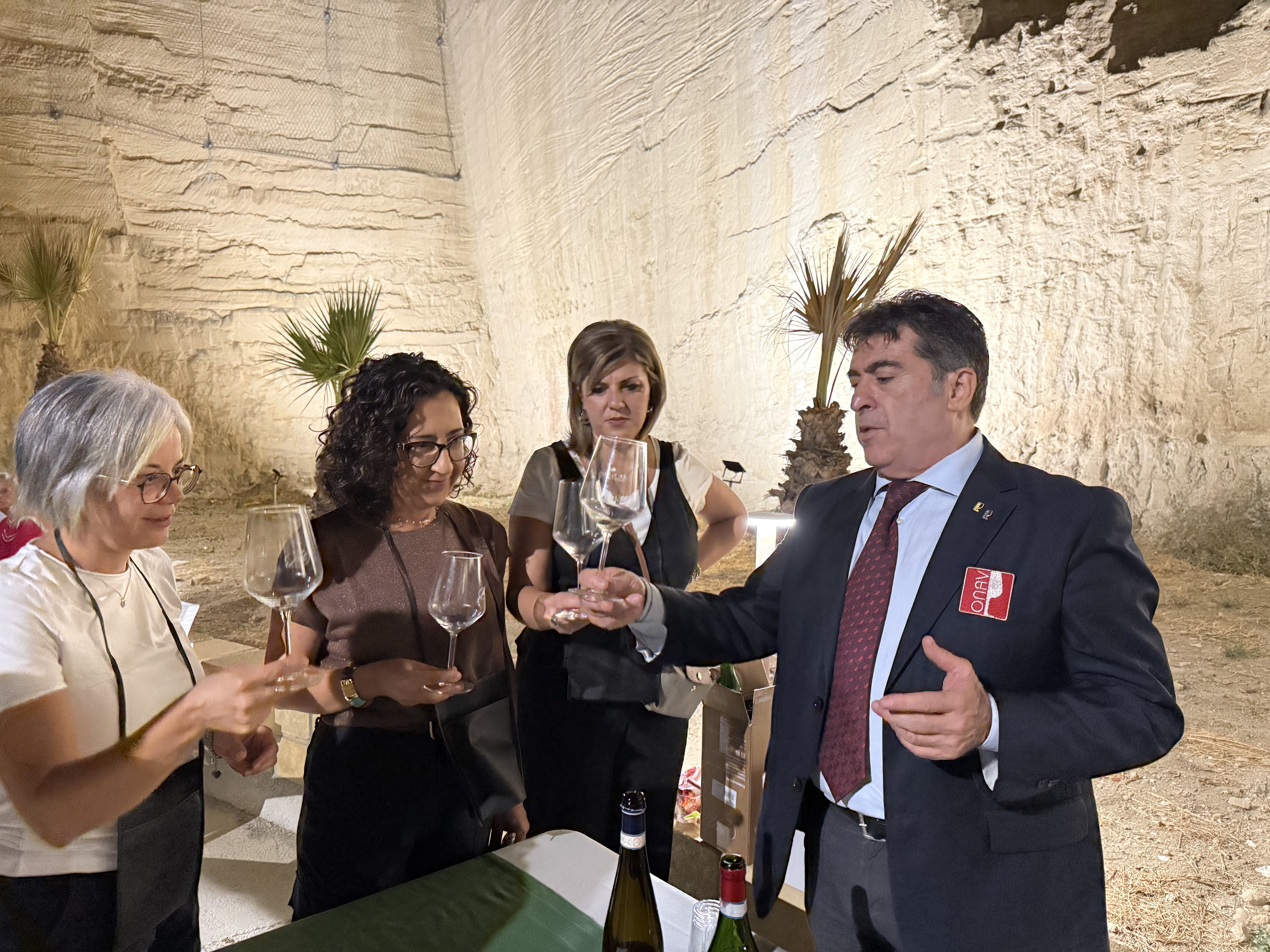
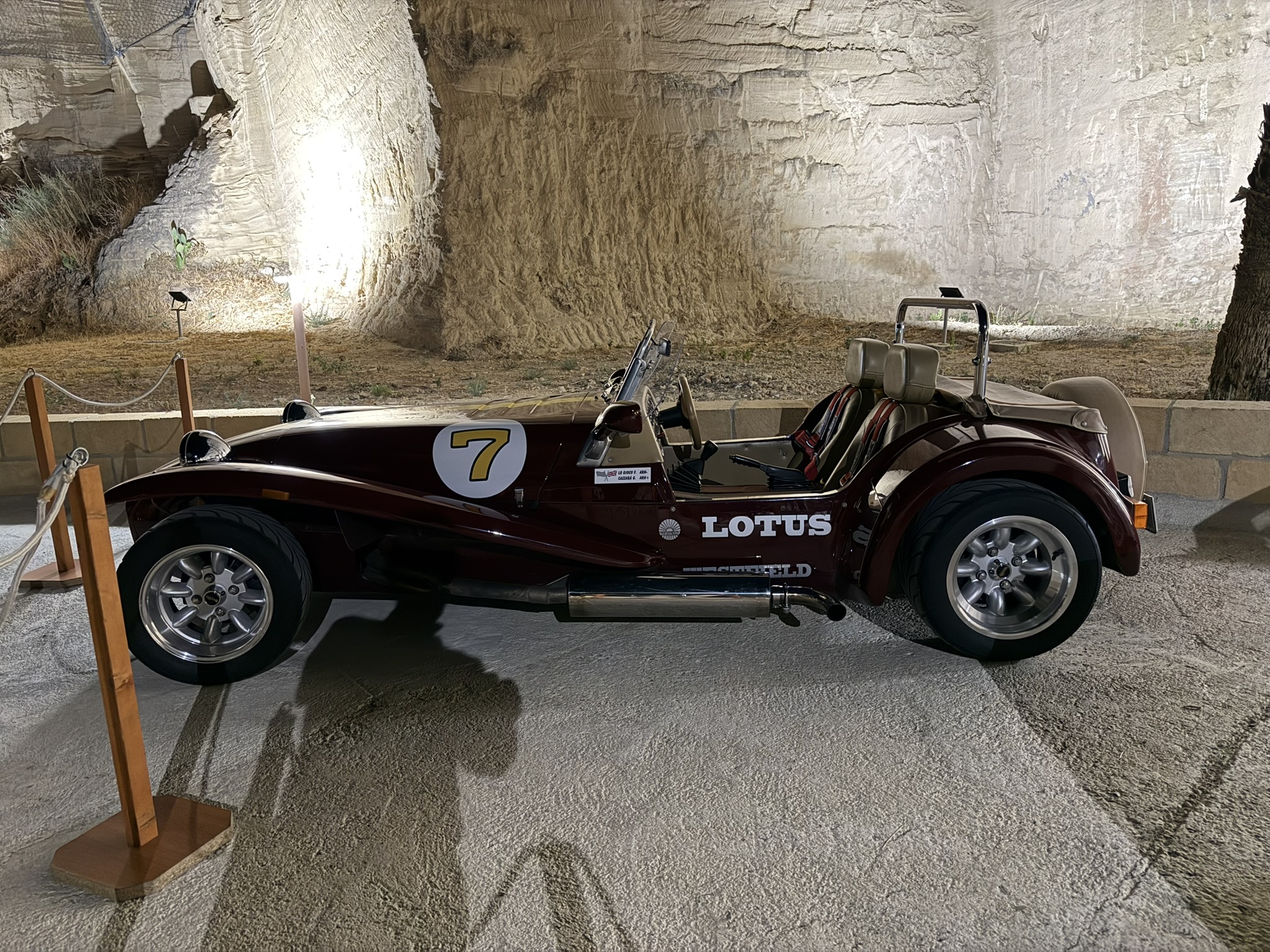
Wine as a product of the land, but also as a way to discover and tell the story of a territory. This was the central theme of “In Vino Salus”, the event held on 16 September at La Pirrera Urban Park in Lascari, promoted by the Municipality of Lascari and organised by the Pro Loco of Lascari, the Strada dei Vini e dei Sapori delle Madonie sul percorso della Targa Florio and ONAV Enna – Nicosia branch.
The choice of La Pirrera added a special atmosphere to the evening. Lascari’s ancient tuff quarry, characterised by cavities and tunnels created by quarrying activities and now restored as an urban, cultural and environmental space, is itself a testament to the relationship between people and the land. It was therefore a particularly fitting setting in which to talk about wine, landscape and identity.
The Pro Loco of Lascari, which has long been committed to promoting the local community, its traditions and cultural and tourism initiatives, contributed to organising an event that attracted a large audience and transformed the tasting into an opportunity to discover the territory.
Four wineries, four expressions of the land
Four wineries took centre stage during the tasting.
Abbazia Santa Anastasia, based in Castelbuono and committed to organic and biodynamic production, includes among its labels Passomaggio, Montenero and Litra, the latter made entirely from Cabernet Sauvignon.
Castellucci Miano, from Valledolmo, cultivates mountain vineyards located between 700 and 1,050 metres above sea level, with a particular focus on Catarratto and Perricone. Its wines include Miano, Shiarà, Perric.One, Maravita, Miano Brut and Nero d’Avola.
Tasca d’Almerita – Tenuta Regaleali, in the Sclafani Bagni area, is one of Sicily’s historic wine estates. Among the estate’s iconic labels are Rosso del Conte, originating from the San Lucio vineyard, and Nozze d’Oro, a white wine made from Inzolia and Sauvignon Tasca.
Finally, Tenuta San Giaime, in Gangi, represents the high-altitude viticulture of the Madonie. Its wines include S’23 Syrah, G’25 Grillo, N’22 Pinot Noir, M’22 Nerello Mascalese and P’22 Perricone, as well as Maqarat.
Four wineries with different histories, altitudes, grape varieties and production philosophies, united by their ability to express in every glass the distinctive character of the places where their vines are grown.
Salvatore Burrafato: tasting wine means tasting the territory
The event was opened by Salvatore Burrafato, an ONAV wine taster, who guided the audience through a journey of conscious wine tasting.
At the heart of his presentation was the inseparable connection between wine and terroir. Every wine is born from the interaction of four fundamental elements: soil, climate and microclimate, grape variety and human intervention.
Wine, therefore, is not simply the result of a production process; it is an expression of the place where it originates. Change the soil, altitude, exposure or microclimate, and the same grape variety can reveal a completely different character.
It was from this perspective that Burrafato invited the audience to experience the evening’s tasting: through those wines, in a sense, we were tasting the Madonie themselves.
The Wine Route begins again: from product to journey
This same vision was at the heart of the contribution by Salvatore Cicco, from Tenuta San Giaime and President of the Strada dei Vini e dei Sapori delle Madonie sul percorso della Targa Florio.
With a history spanning around twenty years, the association resumed its activities in 2026 after a period of inactivity. This new beginning has the potential to be significant not only for the wine sector, but for the entire tourism system of the Madonie.
A Wine Route reaches its full potential when it succeeds in transforming a collection of outstanding local products into a genuine travel itinerary.
A winery then becomes one stop on a broader journey encompassing restaurants, traditional products, accommodation, landscapes, cultural heritage, local towns and communities. A wine tasting can be combined with a walk through the vineyards, a meeting with the producer, a lunch inspired by local cuisine or the discovery of places that are usually outside the traditional tourist routes.
And this is where the Targa Florio can become an extraordinary distinguishing feature.
The roads on which one of the world’s most celebrated motor races was born can become the narrative thread through which travellers explore the Madonie and encounter their wines, flavours and communities.
No longer three separate elements, but one story: Wine, Food and the Targa Florio.
The revival of the Wine Route can therefore help create a distinctive and marketable tourism offer, connecting wine producers, restaurateurs, accommodation providers, tourism operators and local authorities. Above all, it can encourage visitors to travel through the territory rather than limiting their experience to a single destination.
This perspective is particularly relevant for inland areas, where experiential tourism can encourage longer stays and help distribute visitor flows towards places and businesses that would otherwise struggle to reach tourism markets independently.
From the Madonie towards Nicosia and the western Nebrodi
This vision can also extend beyond the geographical boundaries of the Madonie themselves.
The collaboration with ONAV Enna – Nicosia branch points towards an interesting connection with Sicily’s inland areas and the western Nebrodi.
Nicosia can serve as a natural bridge between territories that share mountain landscapes, agricultural and food traditions, local heritage and a common need to develop an integrated tourism offer.
After all, administrative boundaries matter little to travellers. What matters are the experiences, the roads they travel and the stories a territory is able to tell.
A greeting from Totò Riolo and the music of the Quartetto Florio
One particularly enjoyable moment came with a phone call from Totò Riolo, the racing driver from Cerda with deep ties to the Targa Florio and an eleven-time winner of the historic competition, who was unable to attend the evening in person.
At the end of his greeting, Riolo good-naturedly reminded the audience to drink in moderation, inevitably bringing a smile to those who were, at that very moment, taking part in an event dedicated to discovering and appreciating wine.
The evening was accompanied by the music of the Quartetto Florio, a Sicilian string quartet whose repertoire ranges from classical music to contemporary interpretations of famous pop and rock songs.
In Vino Salus showed how a wine tasting can become something more: an opportunity to tell the story of a landscape, its products and its history.
And perhaps this is precisely the challenge facing the renewed Strada dei Vini e dei Sapori delle Madonie sul percorso della Targa Florio: to ensure that behind every bottle visitors discover a place — and that, once they have discovered that place, they feel inspired to set out on a journey to experience it for themselves.
Because behind every wine there is a territory.
And that evening, at La Pirrera in Lascari, the Madonie were in the glass.
Riccardo Zingone 14/06/2026
Agri Med Europe: the Nebrodi embrace the Mediterranean
The Spirit of Agri Med Europe 2026 and the Value of Hospitality
A magnificent celebration of the people, welcoming its guests in the best possible way. Ultimately, this is what Agri Med Europe 2026 was all about: a massive, choral embrace through which an entire territory chose to showcase itself to the world by sharing the very best it has to offer. Welcoming the international delegation brought with it several values and meanings that go far beyond a standard moment of institutional courtesy. Indeed, it reinforced the principle that the Mediterranean must be interpreted as a place of encounter rather than conflict; that territorial boundaries must be overcome through cohesion among peoples; and that the word guest—a term that in antiquity simultaneously encompassed the concepts of "the host" and "the hosted"—proved that the principle of hospitality was an undeniable aspect of human dignity. These are tough concepts to swallow in times when there is endless talk of barriers, border defenses, and "racial" or ethnic distinctions. Thanks to the political activity of the D-MED Political Committee in strengthening dialogue among Mediterranean countries, and to the hospitality offered by a small corner of the magnificent Nebrodi mountain range, an exceptional example of welcome, intercultural dialogue, and mutual friendship was put on display.
The Conference: "What is Needed from Europe to Support Agricultural Producers"
Agri Med Europe was therefore conceived and realized to grant visibility to the Nebrodi region through its cultural and traditional values. The agri-food and ceramic sectors channel themselves perfectly into this path, serving as a genuine expression of local identity. The exhibitors' stands (nineteen dedicated to Nebrodi agri-food products and six to ceramics from Santo Stefano), carefully positioned along the charming side streets lining the long Via Vittorio Veneto in Santo Stefano di Camastra, revealed themselves to visitors only as they passed by, making it impossible to spot them from a distance. This image, which the organizers perhaps unintentionally offered to the public, serves as a metaphor for the hard, silent, and sometimes invisible work behind companies that struggle daily to keep their businesses running amidst restrictions, bureaucracy, and often incomprehensible regulations.
Institutional Dialogue with MEP Antoci and Territorial Marketing
These were the key themes that emerged from the dialogue between producers and Europe during the meeting held between the exhibitors present at Agri Med Europe and MEP Antoci, at the foot of the Mother Church of the city of ceramics. The numerous speeches that followed reinforced the need for mutual collaboration between operators and institutions, based on and supported by a careful territorial marketing plan, as the only way to provide concrete answers to the various sectors that form the social and economic backbone of the territory. These insights and requests were promptly welcomed by the MEP who, as a supporter and practitioner of the "politics of doing," made himself available to listen closely to the producers. Together, they are working on a comprehensive territorial organization project that takes into account the needs, critical issues, and enormous potential that sometimes struggle to express themselves due to a lack of up-to-date marketing strategies.
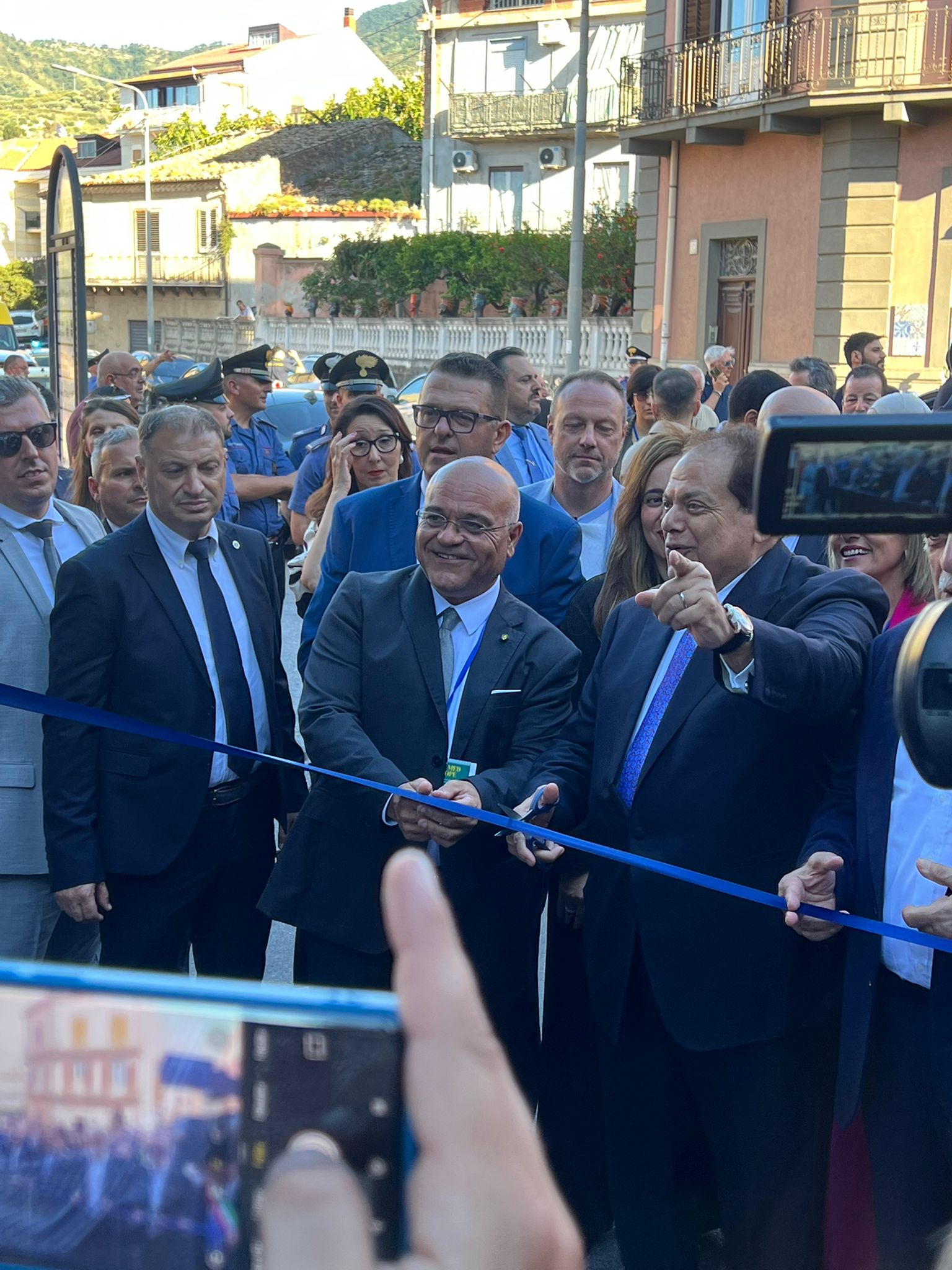
Equally interesting and meaningful was the participation of the I.I.S. "A. Manzoni" of Mistretta, represented by the Hospitality School based in Santo Stefano di Camastra. The synergy sparked between this institution and the Slow Food Nebrodi operators—which materialized in the presentation of several iconic local dishes—further reinforced the concept that agri-food traditions must not only be preserved but, above all, passed down from generation to generation, recognizing food as a powerful expression of identity.
The Official Inauguration and Folk Traditions in Celebration
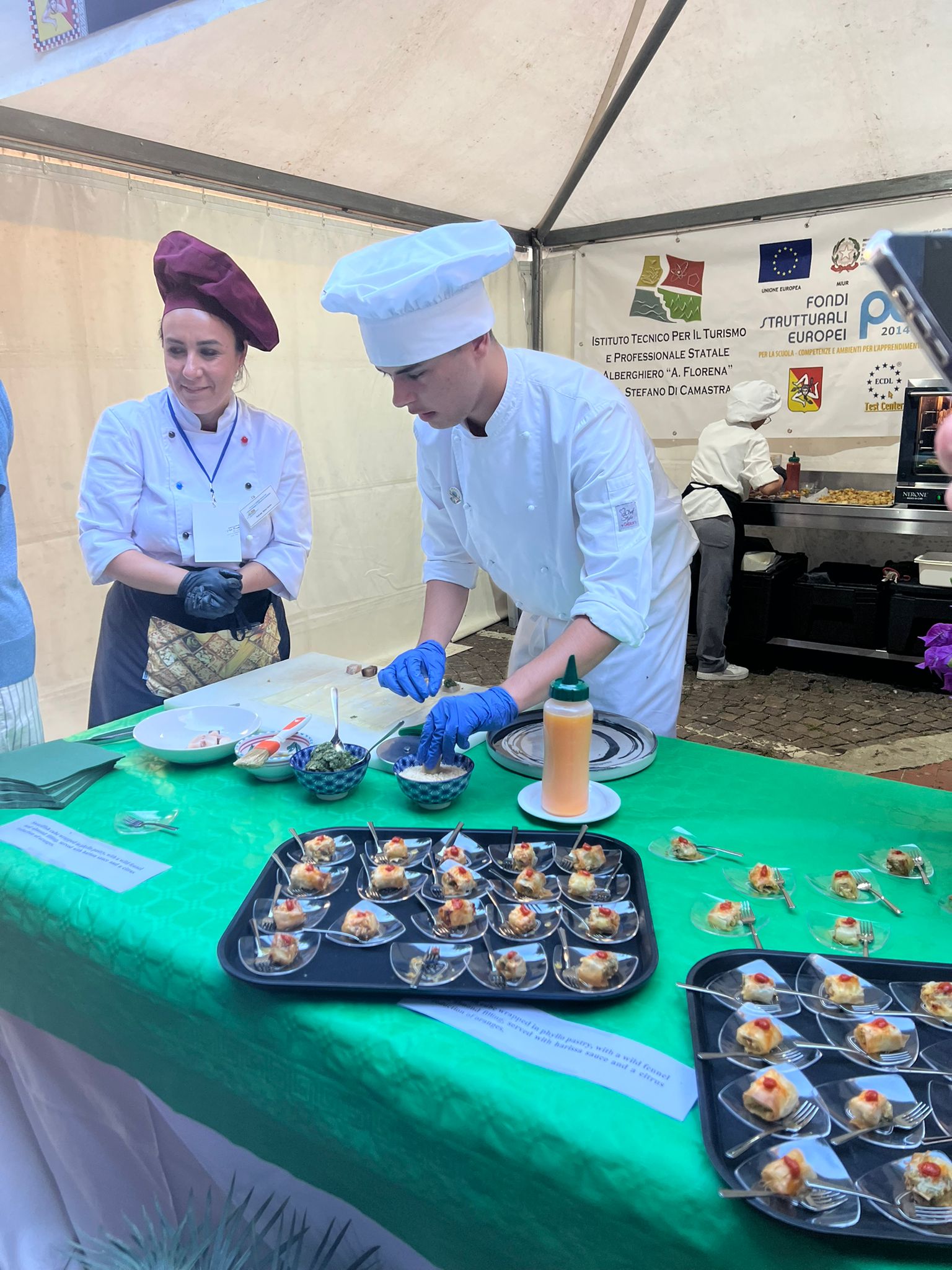
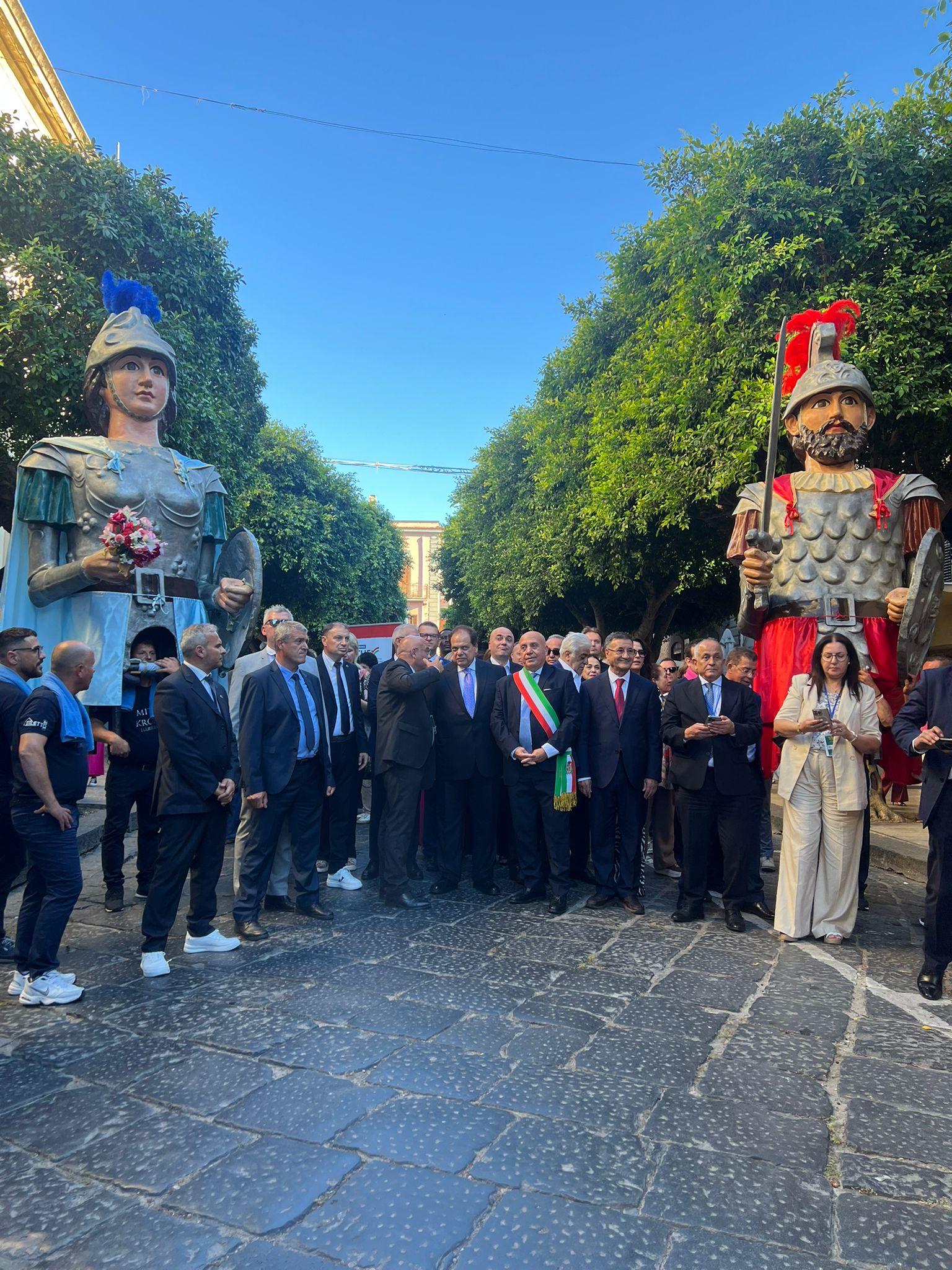
The strong emotional charge following the ribbon-cutting ceremony—performed by the President of the Parliamentary Assembly of the Union, the Egyptian Mohamed M. Abou El Enein, and the President of the D-MED Political Committee, MEP Giuseppe Antoci—was palpable throughout the entire event. It accompanied the delegation and the audience until the manifestation closed late in the evening. This emotion quickly turned into amazement at the very first musical notes, which accompanied the striking dances of the Giants of Mistretta through the streets of Santo Stefano. These iconic symbols of the Nebrodi city's identity were followed by festive performances from the Amastra folk group, the Santa Cecilia Musical Association of Santo Stefano di Camastra, the cheerleaders of the I.C. Tusa-Mistretta, and the large, colorful group of the Jews of San Fratello (Giudei di San Fratello). This wonder was immediately evident from the vast number of smartphones held high in the air, eager to capture unique images to show back home or to share instantly via social media livestreams, thus providing an exceptional and deeply meaningful promotional opportunity for the territory.
The Final Message: The Strategic Centrality of the Nebrodi and Sicily
Drawing from these sensations, impressions, and the resulting economic development prospects for the region, Agri Med Europe delivers a powerful message: the Nebrodi area, bolstered by its biodiversity and authenticity, can and must play a strategic role in the economic and social development of the territory, thanks to the recognized and reinforced central role of Sicily within Mediterranean economic and trade routes.
Exhibitors in Attendance:
Terre audaci, Gelateria artigianale Giovanni Alferi, Acquafico Garden, Dei Casabona, Il vecchio carro, Il Melograno, Il Cavaliere, La dispensa del massaro, Caseificio Albereto, Dolci tentazioni, Condotta Slow Food Nebrodi, A.Fioriglio, 24 Baroni, Li paternosci, Casaleni Natural Bio, Villa Colonna, Ceramiche Serravale, Nadal, Le Malagioie, Le terrecotte del soleil, Nino Ferrigno, Zolea Art & Design.
Halaesa Nebrodi 13/05/2026
Agri Med Europe in Santo Stefano di Camastra
Agri Med Europe: Santo Stefano di Camastra becomes the beating heart of the Mediterranean between Politics, Excellence, and Identity
SANTO STEFANO DI CAMASTRA – On June 13th, Sicily is set to experience a day of extraordinary strategic importance. Santo Stefano di Camastra, known worldwide as the "City of Ceramics," will host Agri Med Europe, an event that aims to create an original synthesis between high-profile institutional moments and the promotion of the agri-food and cultural heritage of the Nebrodi territory.
The initiative was established under the aegis of MEP Giuseppe Antoci, President of the Political Commission of the DMED for the European Parliament. The stated objective is clear: to strengthen Sicily's centrality within the commercial, cultural, and political routes of the Mediterranean, highlighting local identity as a driver for development.
The institutional path: from Palazzo dei Normanni to the Nebrodi
The day will begin at 10:30 AM in the historic heart of Palermo. Political delegations from 42 Mediterranean countries will be welcomed at Palazzo dei Normanni, where they will visit the Palatine Chapel, a symbol of the fusion between Arab and Norman cultures.
After a moment dedicated to tasting the island's gastronomic excellence, the core proceedings will begin at 1:00 PM in the Sala d’Ercole. Here, the Political Commission of the Parliamentary Assembly of the Union for the Mediterranean, chaired by Hon. Antoci, will meet for a discussion on economic and political strategies destined to influence the entire Mediterranean basin.
Arrival in Santo Stefano and the role of GMT™ Halaesa Nebrodi
In the afternoon, the focus of the event will shift to Santo Stefano di Camastra. At 4:00 PM, the conference "What is needed from Europe to support agricultural producers" will offer a platform for dialogue between institutions and local businesses, aimed at guiding the growth of agricultural companies in line with European directives.
At 4:45 PM, the arrival of international delegations will mark the official inauguration of Agri Med Europe and its exhibition spaces. Within this area, a fundamental presence will be that of GMT™ Halaesa Nebrodi, which will actively participate with its operators. The district will act as a key interlocutor to illustrate a productive heritage that is not just about economy, but about the active protection of biodiversity and food and wine traditions.
An immersion in agri-food excellence
The absolute protagonist of the exhibition spaces will be the Nebrodi territory, represented by a rigorous selection of products including:
-
Ancient varieties of Sicilian durum wheat;
-
Provola dei Nebrodi, Capizzi Truffles, and renowned I.G.P. and De.Co. products;
-
Prestigious Slow Food Presidia, among which the Nebrodi Black Pig stands out.
Through targeted tastings, these excellences will act as true "ambassadors" of the rural and cultural soul of the region, offering visitors an authentic and engaging experience.
Art, Folklore, and Tradition: a city in celebration
Agri Med Europe will also represent an important opportunity to showcase arts and traditions. The event will highlight high craftsmanship with the master potters of Santo Stefano, who will create works live, witnessing knowledge handed down for generations.
From 7:00 PM, the historic center will transform into an open-air theater:
-
In Piazza Matrice, the evocative performances of the Giants of Mistretta and the charm of the Jews of San Fratello, famous for their embroidered jackets and trumpet sounds linked to Holy Week rites.
-
Along Via Umberto I and the Viale delle Palme, the songs and dances of the Amastra Folk Group and musical performances by the Santa Cecilia Musical Association.
-
Traveling shows, live bands, and DJ sets will animate the evening until late at night.
The event will conclude at 7:45 PM with a Gala Dinner at the prestigious setting of Palazzo Trabia, sealing a day dedicated to building new Mediterranean synergies and promoting Sicilian territorial identity.